Driving through the darkness of Wyoming's high desert, the stars gradually fade as the first light of dawn begins to rise behind me. I left Rock Springs nearly ninety minutes ago, heading south before turning west onto a rough dirt road. Though it is nearly summer, the morning is unexpectedly cold. The dashboard reads 38°F. I have not seen another vehicle since leaving town, and as I follow the twisting track into unfamiliar country, I search anxiously for signs that confirm I am not lost.
Horses occupy a special place in our imagination. From a young age, we are drawn into stories of these trusted companions. Just yesterday, I was talking with a colleague about my plans to photograph wild horses in Wyoming's high desert. She told me about her young son, who has become fascinated with horses. One day they wandered past a local equestrian center where riders were competing. Since then, her son has been captivated, spending hours dreaming and talking of powerful horses and riders who navigate jumps and obstacles with remarkable precision.
Here in the high desert, free-roaming horses still wander across the open plains. As I sit on the ridge waiting for sunrise this morning, I scan the landscape for movement. I cannot yet see the horses, but I recognize the faint images in the distance: silhouettes standing on distant ridge lines, manes lifted by the wind, framed against an endless western sky.
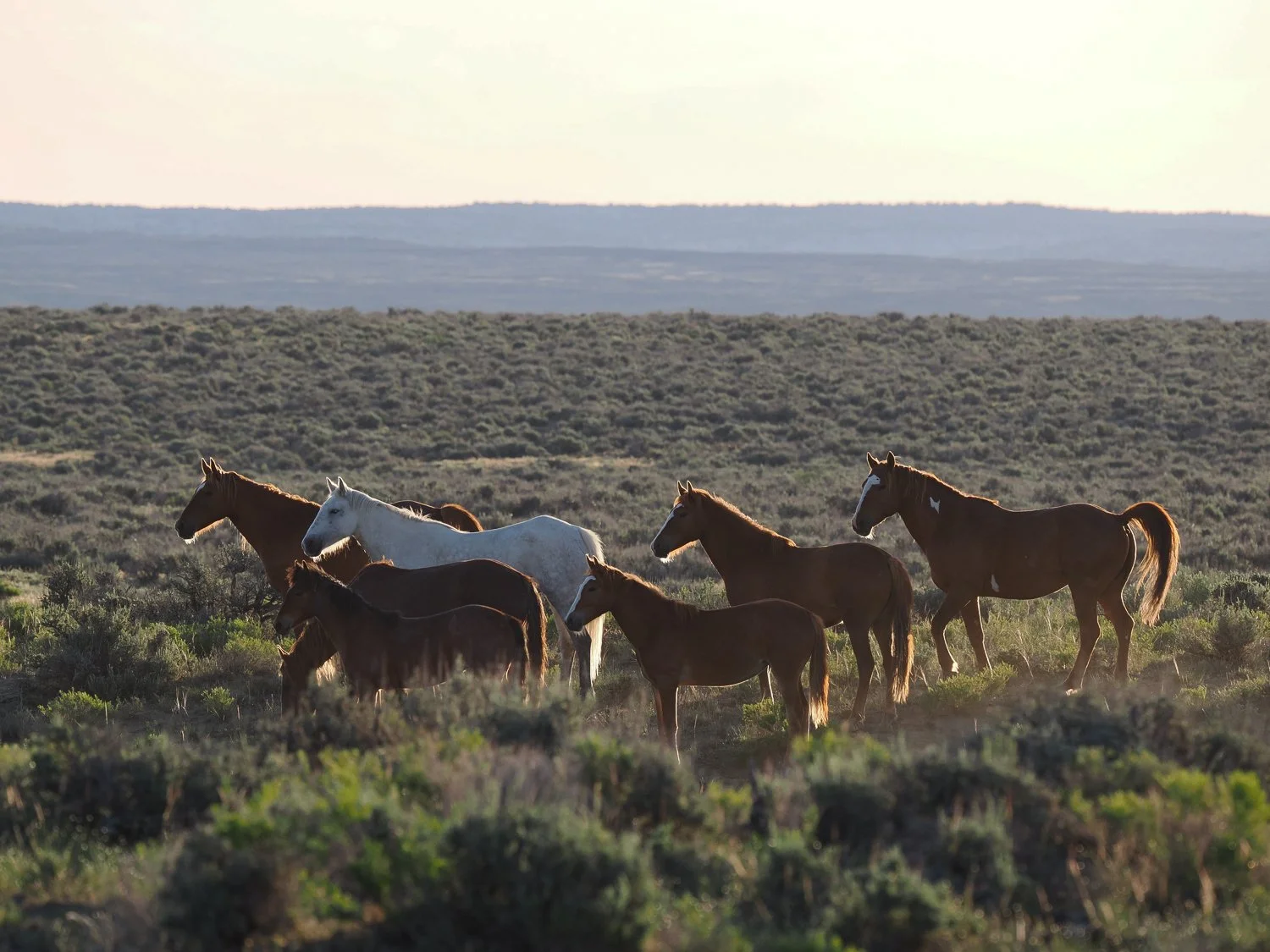
For generations, horses here have come to symbolize freedom, independence, and the spirit of the frontier.
Horses have a storied history in North America. Ancient horses evolved on this same land and once roamed the continent in great numbers before disappearing thousands of years ago. The horses we see today are descendants of animals reintroduced by Spanish explorers and later carried westward by settlers, soldiers, ranchers, and Native American tribes. Here on the frontier, they became indispensable companions for exploration, transportation, agriculture, and war. Some escaped, others were released, and over generations they formed the free-roaming herds that occupy public lands across Colorado, Wyoming, Idaho, and Utah. Most people I talk to are surprised to learn these herds still exist.
Today these horses live in landscapes that can appear empty at first glance. The high desert stretches across miles of sagebrush, rolling hills, dry washes, and distant ridge lines. From a high vantage point, the country seems almost limitless.
Yet beneath that romantic image lies a landscape organized around a single resource.
Water.
All Trails Lead to Water
Over the last few years, as I have followed bands of horses across the open basins of the West, I began noticing the trails. Faint paths crossed the sagebrush in every direction, weaving through hills and shallow valleys. Individually they seemed insignificant. Together they formed a network that connected nearly every corner of the landscape.
Eventually, I realized that nearly all of them led to water.
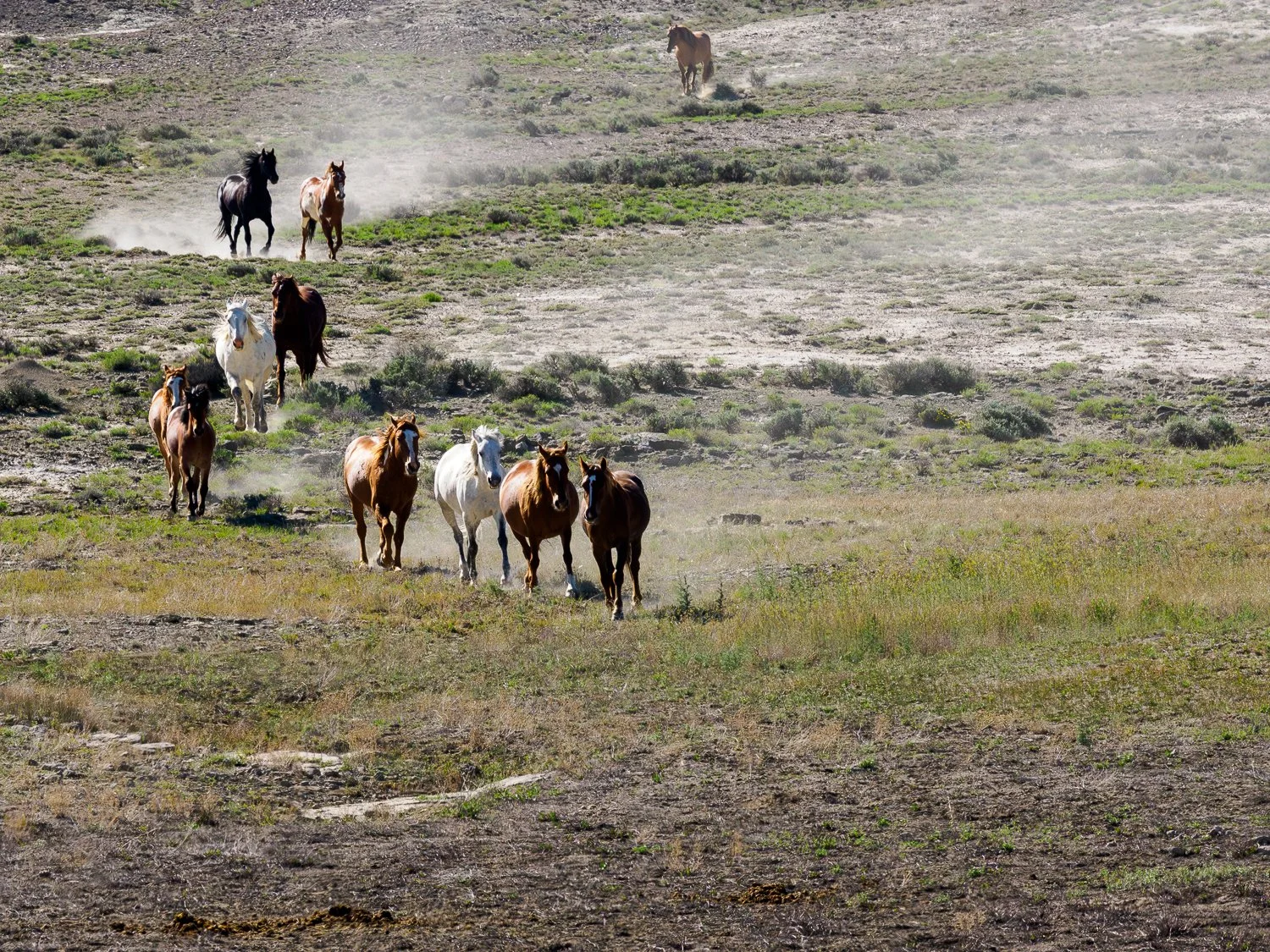
All Trails Lead to Water - In the high desert, every trail has a purpose. Follow the paths worn into the sage by wild horses and they will almost always lead to water
In the high desert, water is life. During wet years, springs and ponds fill and grasses flourish. During drought, reliable water becomes scarce and the distances between sources grow longer. Horses may travel many miles between feeding areas and water, returning day after day to the places that sustain them.
But water serves another purpose as well.
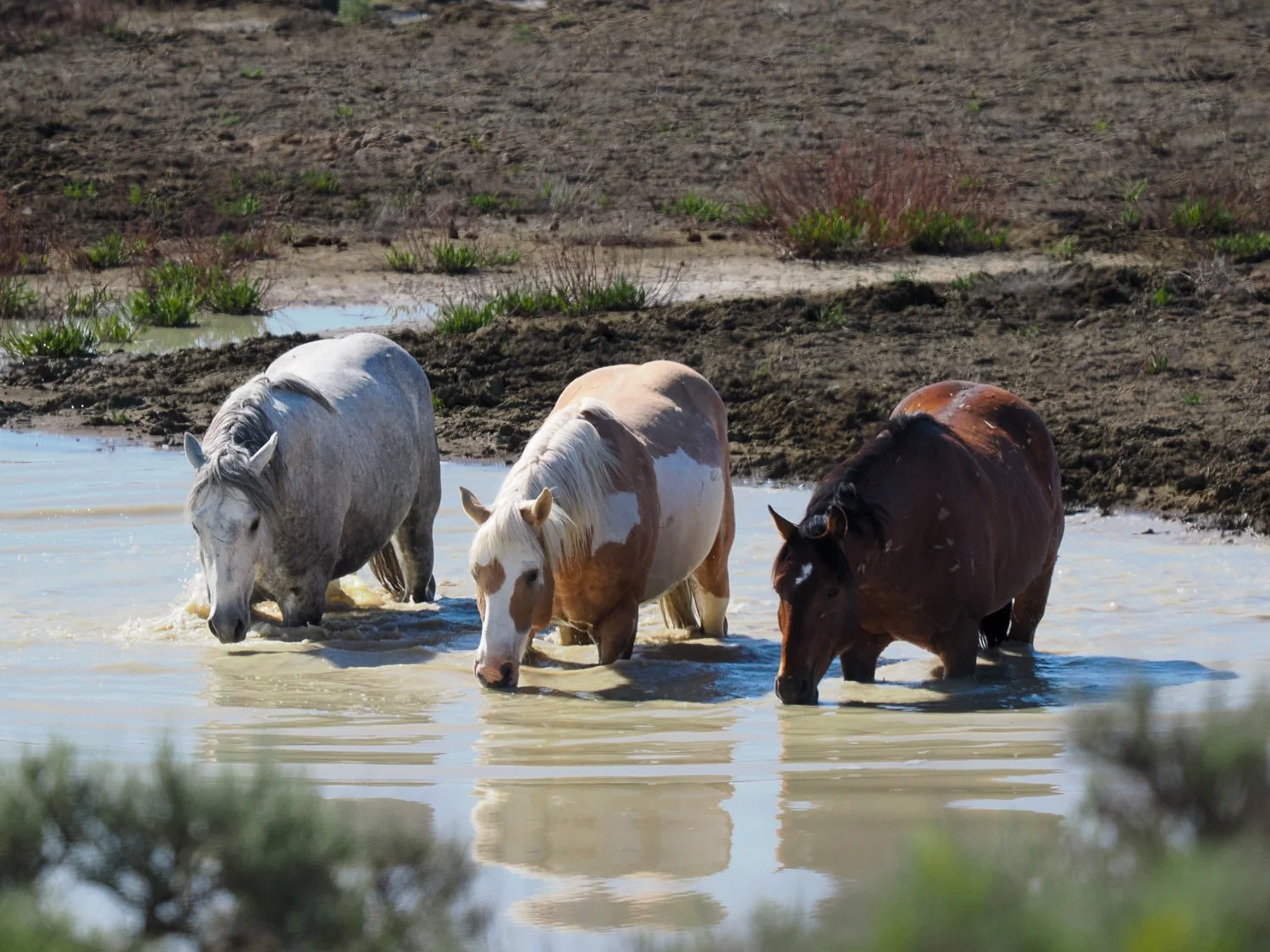
Meeting for a drink - horses come to the water to drink, but also to socialize.
From my vantage point on the ridge, I began to understand that the watering hole is more than a source of survival. It is the social center of the herd, the gathering place where the wider community comes together. Finding horses in the high desert is not a tireless search across a vast landscape; it begins with finding water.
As the morning unfolds, horses begin arriving in small groups. Family bands emerge from different directions, converging on ponds hidden among the hills. Some drink quietly before moving on. Others linger. Horses stand shoulder to shoulder in the shallows. Young horses splash, chase one another through the water, and test boundaries with each other. Around the water, the structure of their society begins to reveal itself.
A typical family band includes a dominant stallion, several mares, and usually one or two young foals. They travel together, rest together, and depend upon one another. Protection, learning, and social bonds are passed through the family.
As I watch, the diversity of the horses is striking. White horses stand beside bays, buckskins, paints, and blacks. Long-maned, slenderbodied horses mingle with others whose ancestry may trace to very different domestic breeds. Some resemble the sturdy horses used in agriculture. Others carry characteristics of ponies ridden by Native American tribes, the mounts that carried settlers west, or the horses that once filled cavalry ranks. Here in the West, horses from many backgrounds have interbred and formed new family groups.
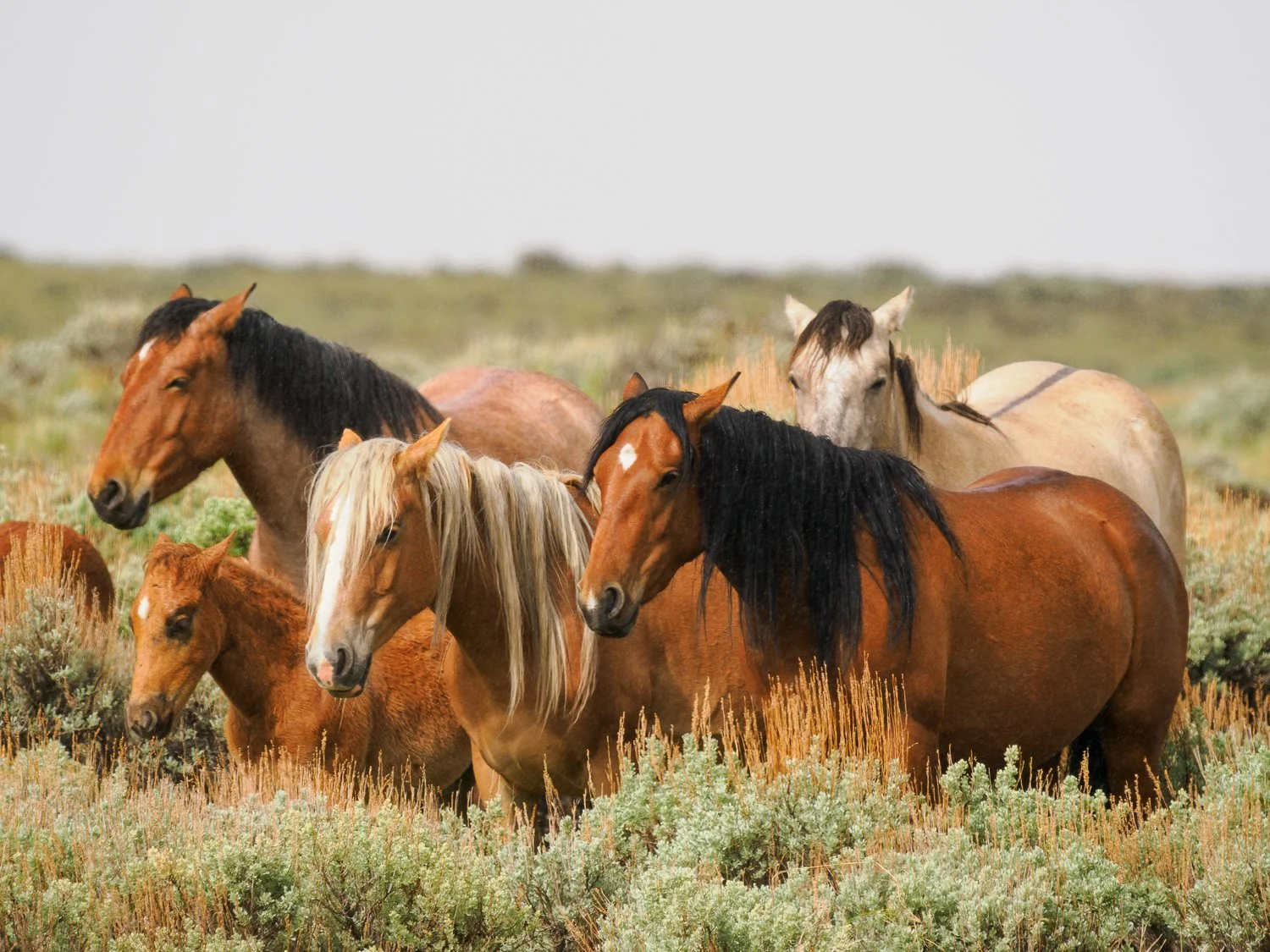
Colorful Family Tree - Wild horse bands of the West reflect generations of mixed ancestry and adaptation.
Today their appearance reflects different histories, but their families are built through shared experience, mutual dependence, and the daily challenge of surviving in a demanding environment.
As the day progresses, I watch the gathering grow and evolve. The quiet arrivals of the morning give way to a constant flow of movement. More families appear from distant ridges. Long lines of horses emerge from the sagebrush and descend toward the water. Some arrive at a trot, others at a gallop, announcing their presence long before they reach the pond. Young horses race and play. Mares keep watch over foals. Stallions test boundaries, posture, and occasionally challenge one another.
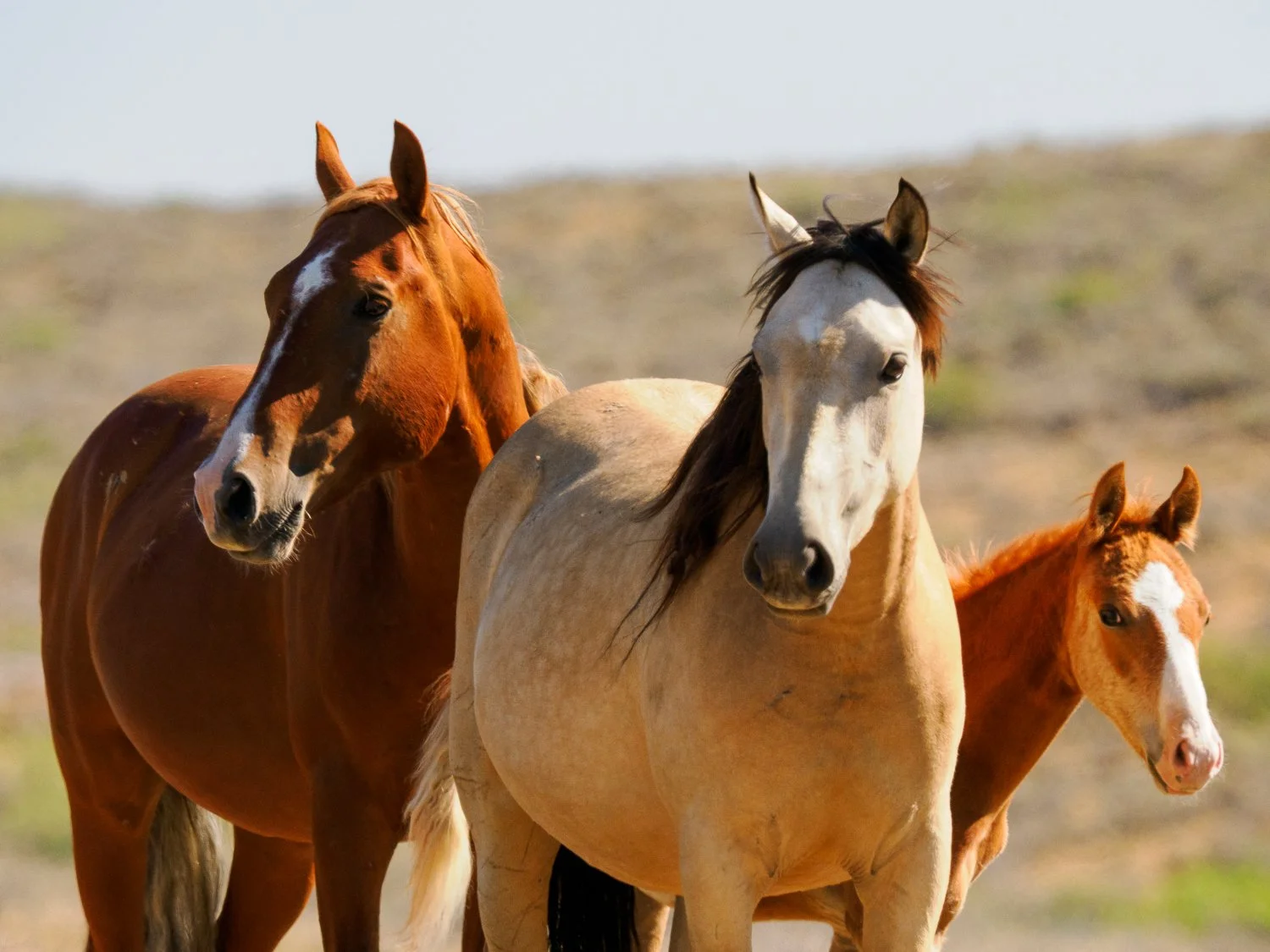
The Modern Family - A mare stands with her foal and another member of the band in Colorado's high desert of Sand Wash Basin.
What first appeared to be an empty landscape reveals itself as a complex and connected society. Then, almost as quickly as it began, the activity starts to fade. By late afternoon, horses drift back toward feeding grounds and distant ridge lines. Family bands spread across the basin once again. The same landscape that seemed empty at sunrise now appears different. The trails remain. The connections remain. The horses have simply disappeared back into a landscape vast enough to hide them in plain sight. Tomorrow they will return, and the gathering will repeat, part of a timeless rhythm that has played out across these basins for generations.
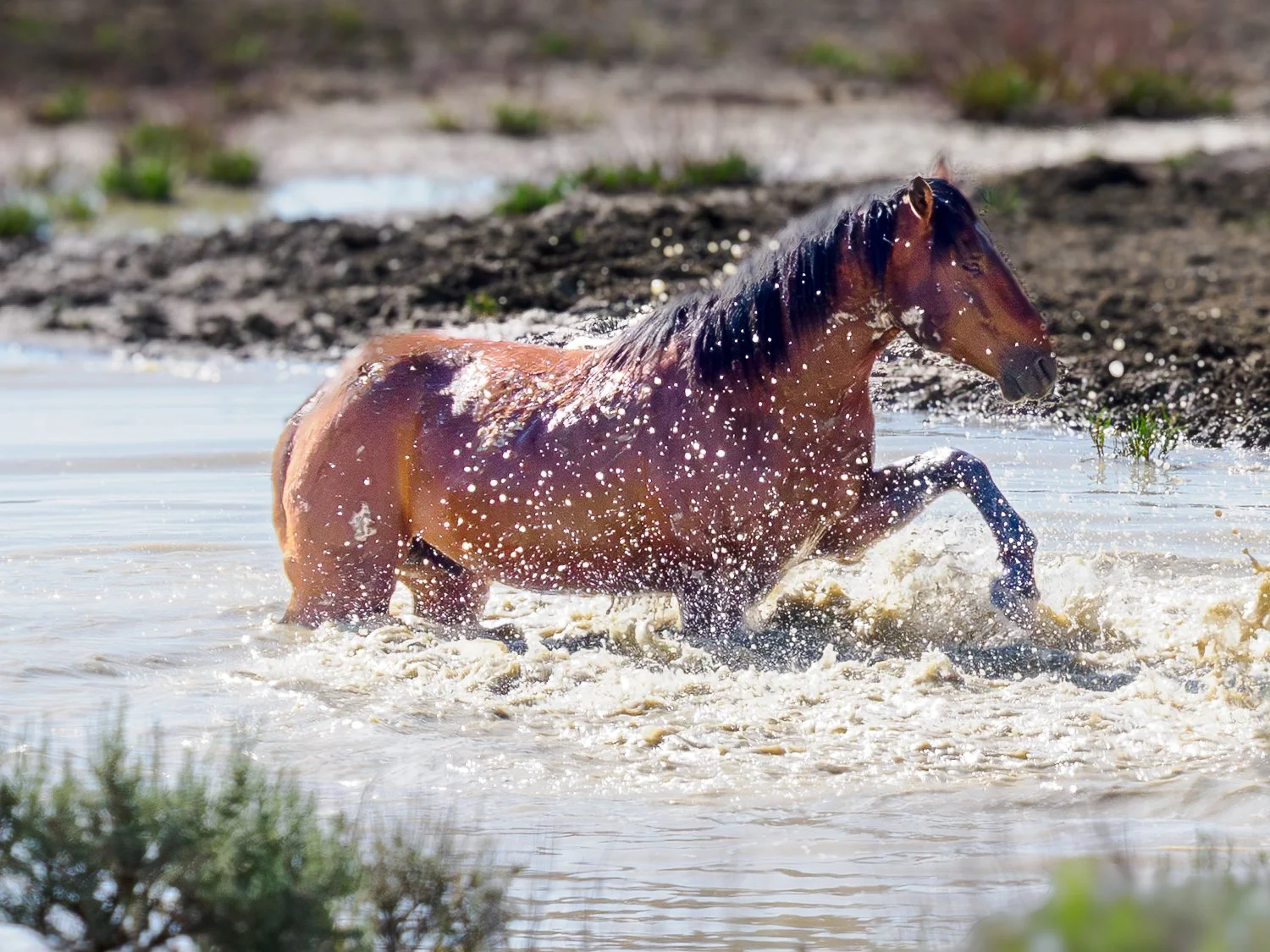
A Cooling Off Period - By midday the watering hole becomes more than a source of drinking water. Around water, practical needs and social life become difficult to separate.
Beyond the Watering Hole
It is easy to understand why people become deeply attached to these horses. Many of these horses are known by name. Dedicated photographers and passionate advocates follow specific bands for years, documenting births, deaths, shifting family relationships, and changes in herd structure. The connection people feel is genuine. For many, these horses represent a living link to the history, independence, and spirit of the West. But the story of wild horses is larger than the horses themselves.
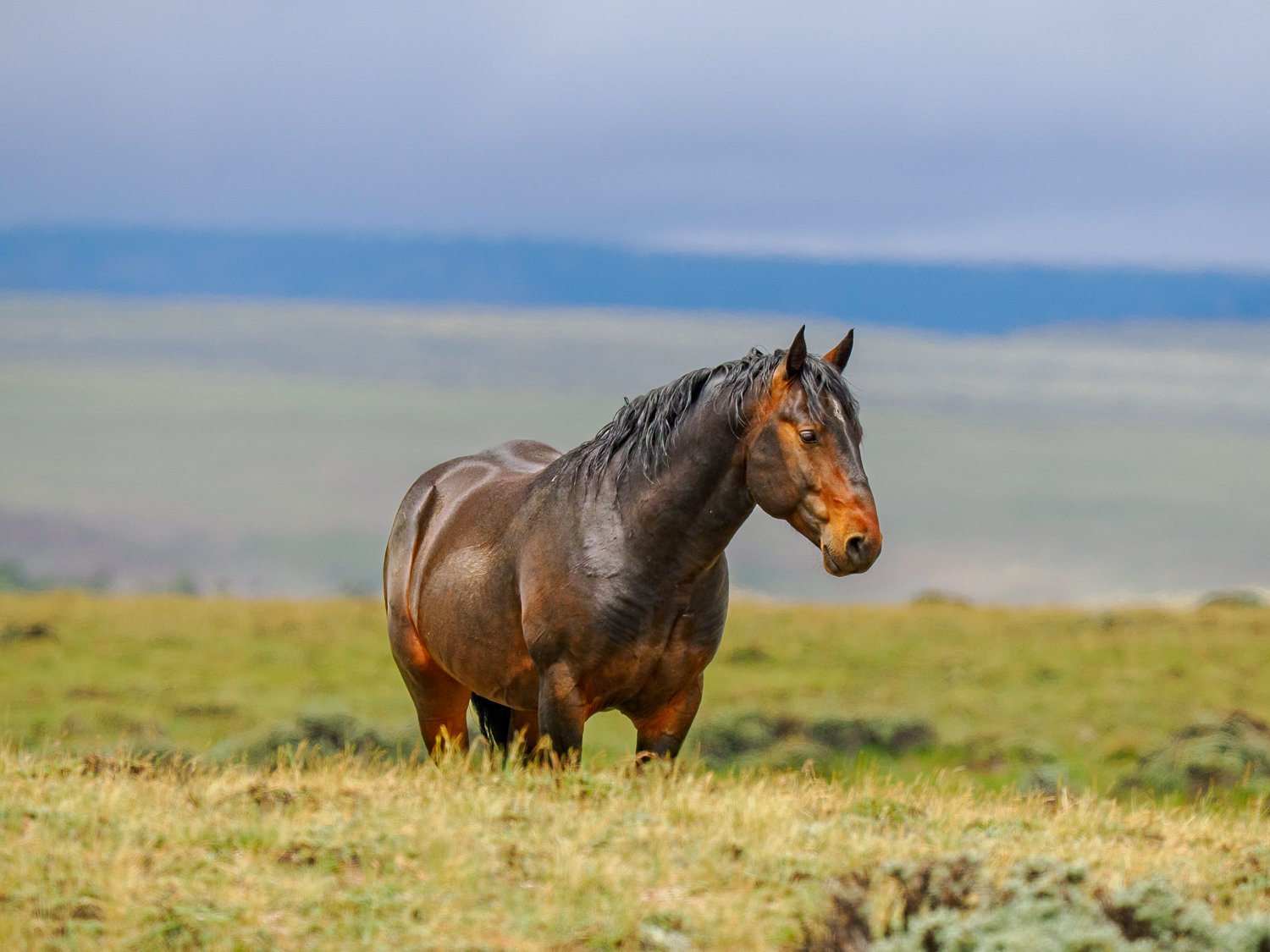
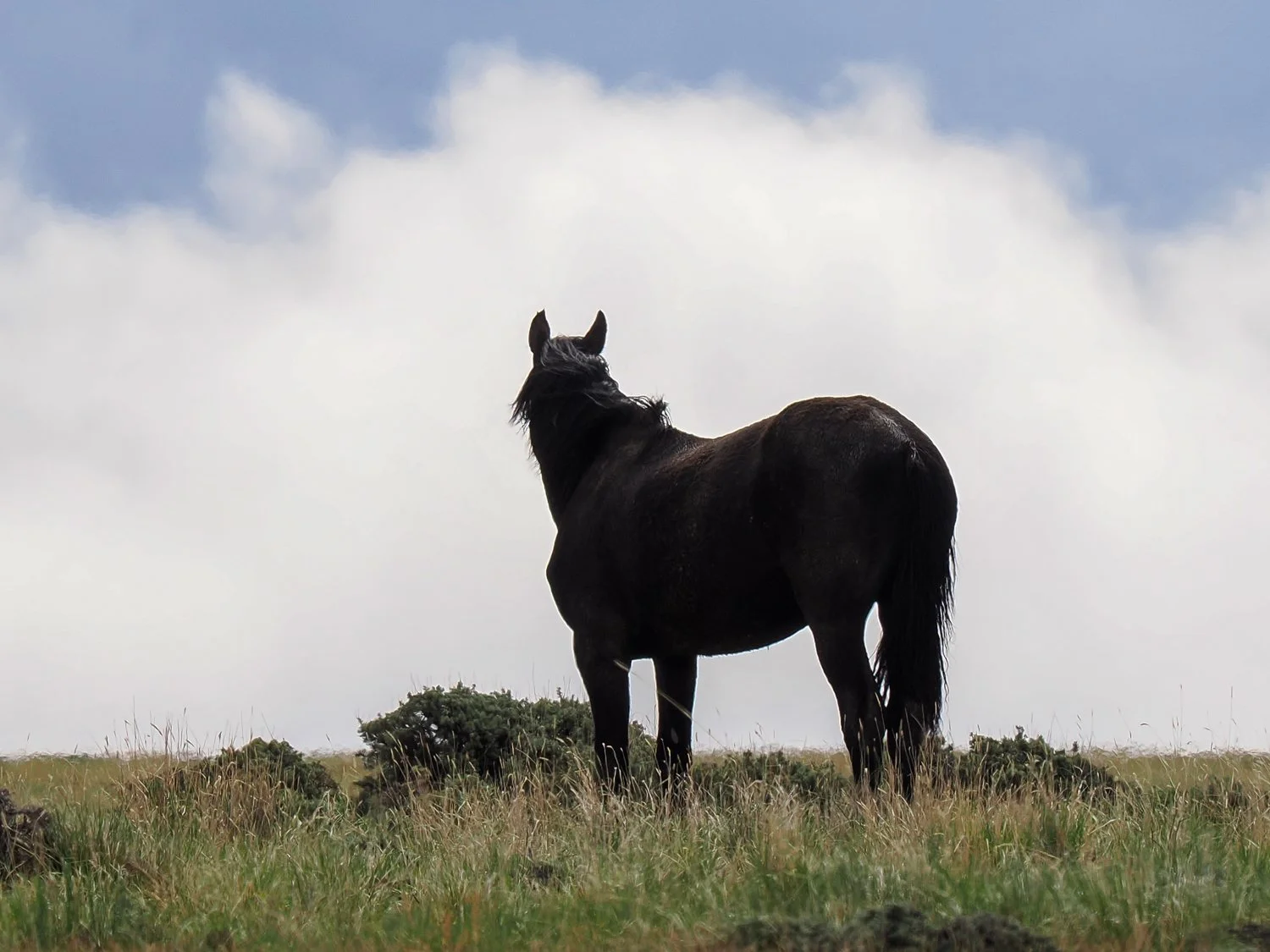
Royalty - Alone on a Wyoming ridge, the stallion pauses beneath a gathering storm. For a moment, he stands like a monarch of the American West, surveying a realm earned through strength, endurance, and time.
These herds share the landscape with native wildlife, ranching operations, limited water resources, and the realities of managing vast public lands. Questions surrounding herd size, habitat health, and long-term sustainability have fueled debate for decades. There are few simple answers, and opinions are often deeply held. As the sun begins to set, those debates feel distant. From the ridge, I watch a family band move across the skyline and vanish into the sagebrush. The same horses that gathered around the water only hours earlier are once again scattered across the basin.
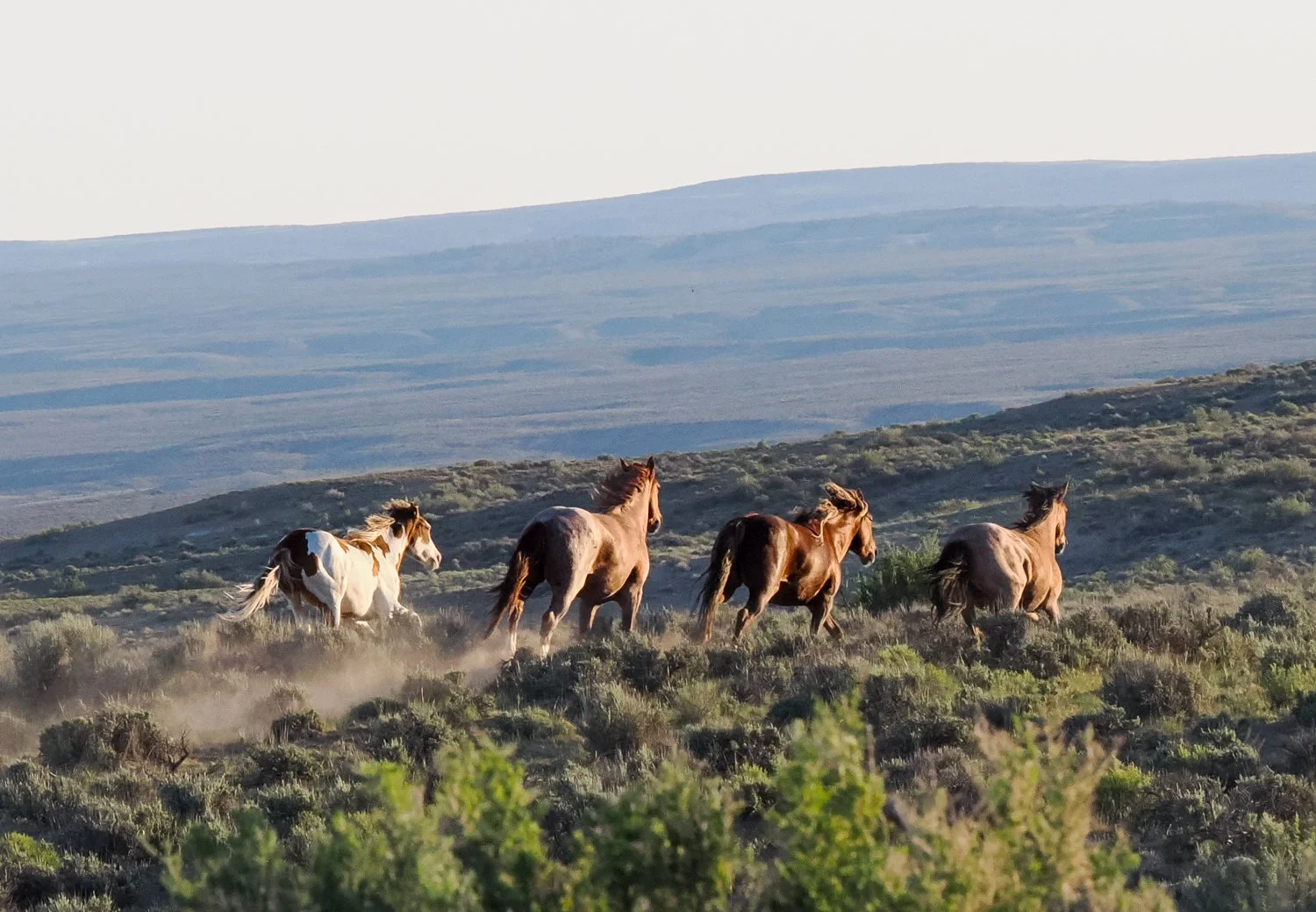
On many days I have watched horses arrive from every direction, connected by trails that were nearly invisible until I understood where they led. What first appeared to be a romantic story of freedom and independence revealed itself as something else. Community. The watering hole was not simply a place to drink. It was a place to gather, to learn, to raise young, and to maintain the social bonds that help sustain the herd.
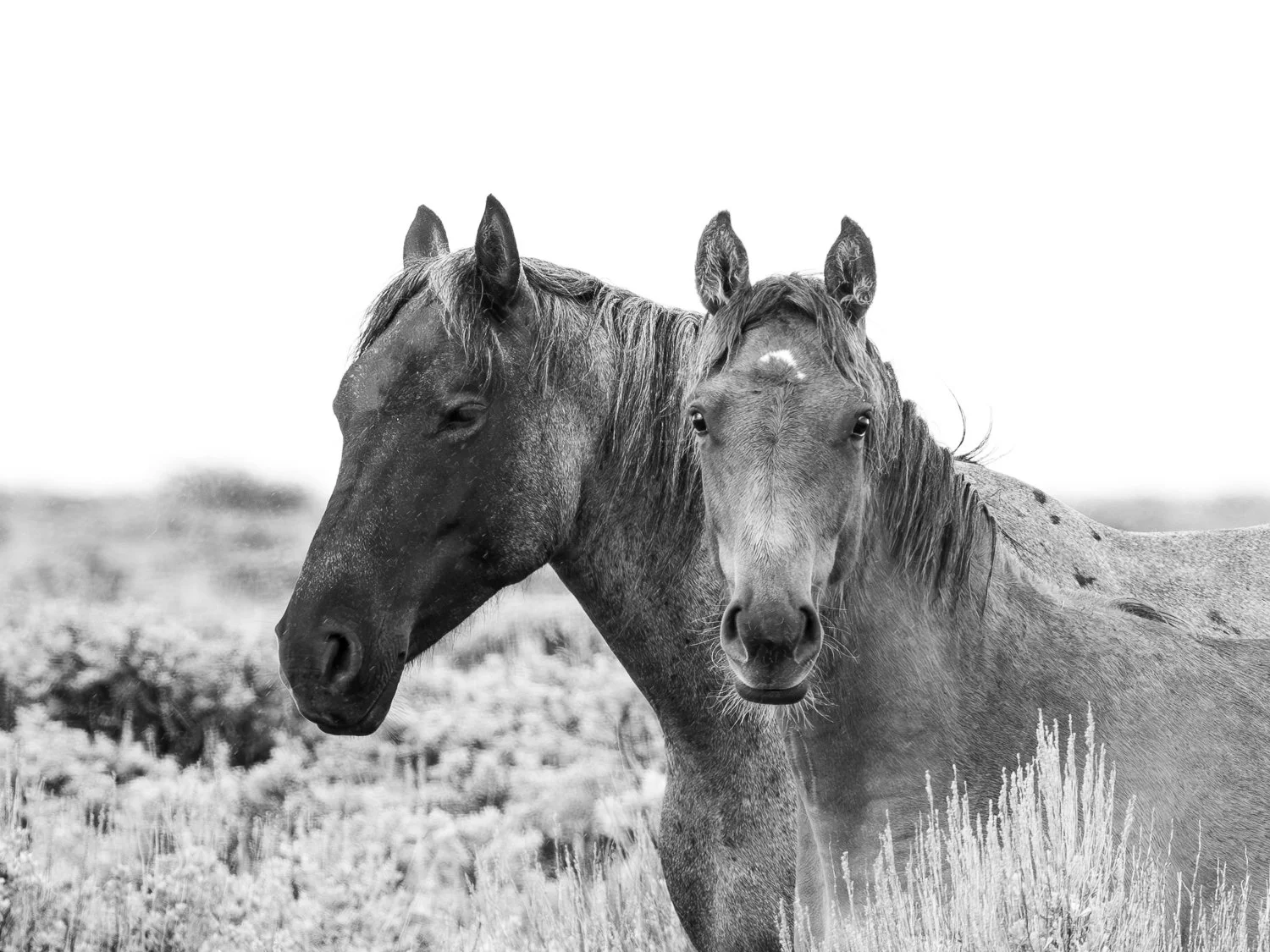
The independence we admire in these animals exists alongside a deep reliance on family, community, and the landscape itself. Perhaps that is part of why horses continue to resonate so deeply with us. In little-known places like Salt Wells Creek and Sand Wash Basin, survival is not simply a story of rugged independence. It is also a story of connection, between horses, families, water, and the land.
As I travel home in the dark, navigating the winding roads that led me here before sunrise, I find myself thinking that the mythology of the wild mustang is not really about horses at all. It’s about understanding the relationships that connect and sustain life and recognizing that especially in these open and seemingly empty places, nothing survives alone.