The scene feels both immediate and ancient. I hear the wolves rallying in the dark, their chorus dominating the river valley, echoing off the mountains. Standing here, I feel a flicker of fear, as if some long-lost instinct has been triggered, urging me to move, to get away. But with the river in front of me and the large vehicle at my back, I hold to a fragile sense of safety in the darkness and ready myself, camera in hand, waiting for the scene to take shape.
As first light reveals more, what unfolds is sudden and chaotic. I find myself thinking of the pioneers who once moved through this river delta, who may have stood in this very spot, and how differently they might have experienced this scene unfolding before me.
————————————————————————————
Entry into Yellowstone from the west brings you quickly to the Madison River. The river begins quietly at Madison Junction, where the Firehole and Gibbon Rivers come together. From there, it flows west into Montana and beyond.
Even in winter, the river rarely freezes. Heat rises from the geothermal heart of Yellowstone, carried through the Firehole, keeping the current alive when everything else locks in ice. On the coldest mornings, steam lifts off the surface in slow, drifting layers, as if the river itself is breathing.
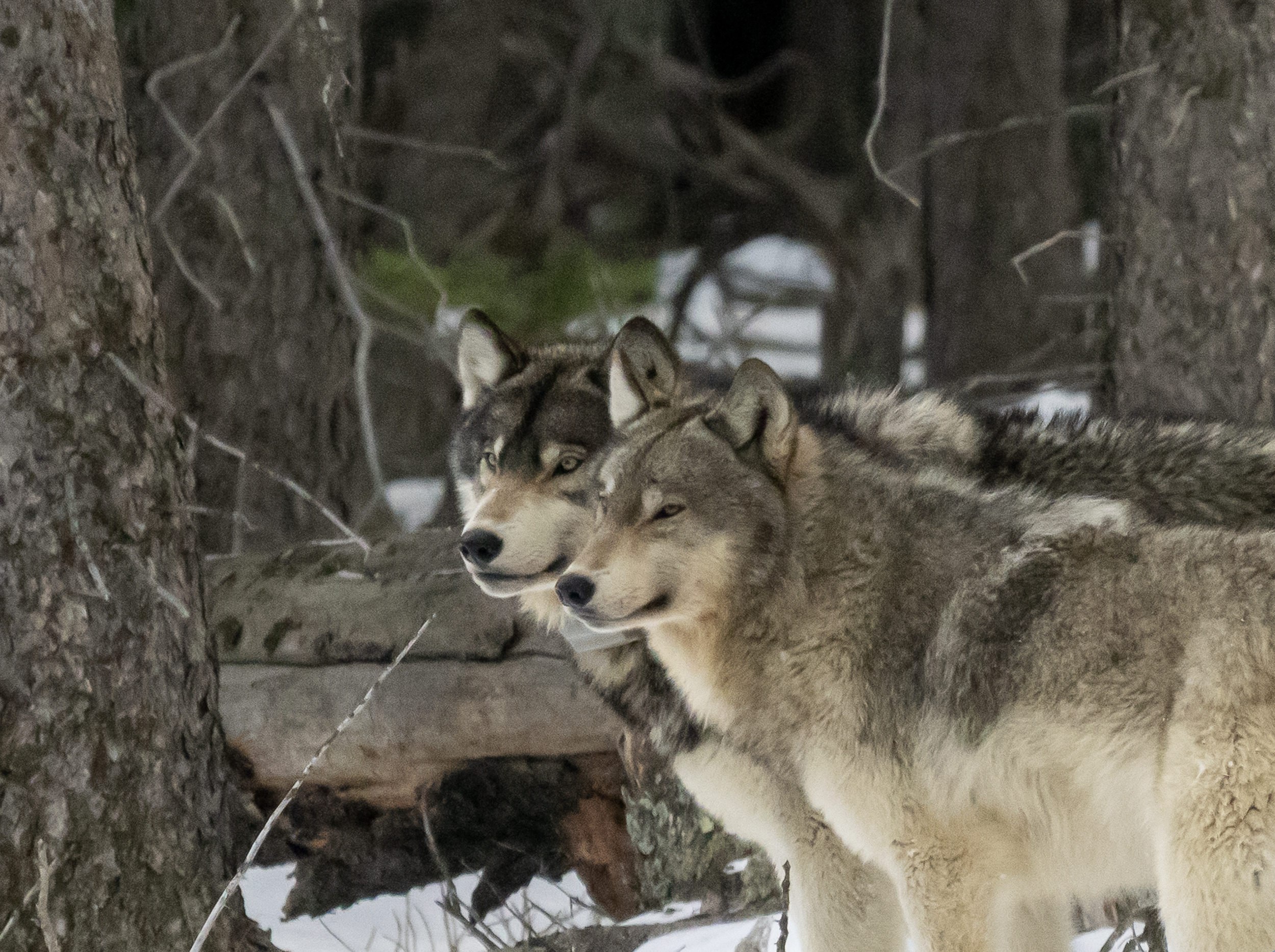
Two wolves from the Wapiti Lake pack pause along the forest edge above the Madison River, alert to movement below.
Not far from here, in 1872, Yellowstone National Park first became an idea, shaped by men who chose to protect this land. Members of the Washburn-Langford-Doane Expedition passed through this valley and saw something in its timeless beauty, from the geothermal shaping of the land to the abundance of wildlife that flourished here.
The Madison River flows through it all.
Day 1 – The Gathering
Yellowstone in winter is a yearly pilgrimage for me and my camera. For the most part, the park is closed, but access is still possible. The road to Cooke City in the north remains open. Entry from the west is more restricted and limited to snow coaches and sleds.
Crossing into Yellowstone still feels like stepping into another time, a boundary marked on a map that means nothing to the land itself. And yet here, a balance feels restored. A place where predator and prey coexist. Where the fight for survival is constant, and nothing is wasted.
This year, I enter through West Yellowstone rather than my usual route from Gardiner into the Northern Range. Still, as I arrive on this frosty morning, the feeling is familiar.
As the sun begins to break through, we scan the landscape. The stillness is stark. The first day is always filled with anticipation. This landscape can yield iconic images, but the shape of the day is always uncertain. Reports from colleagues the day before mentioned an injured bison near the Firehole, separated from the herd. Not unusual, but enough to draw attention. The attention of wolves.
By late morning, we have made our way to Hayden Valley. This, and Lamar Valley to the north, are special places. The land flows like a river between the hills. Open spaces act like bowls, holding life and light, creating a canvas for curiosity, imagination, and the rare moments that define this place.
Our morning is interrupted by a call on the radio. A guide has spotted the injured bison in the Madison River, a few miles downstream from the junction.
We pack quickly and head out. The coach is silent.
Ninety minutes later, we arrive and begin searching the river channels and access points. Bison are spread across miles of the park, traveling in groups for safety and moving constantly in search of grass beneath the snow.
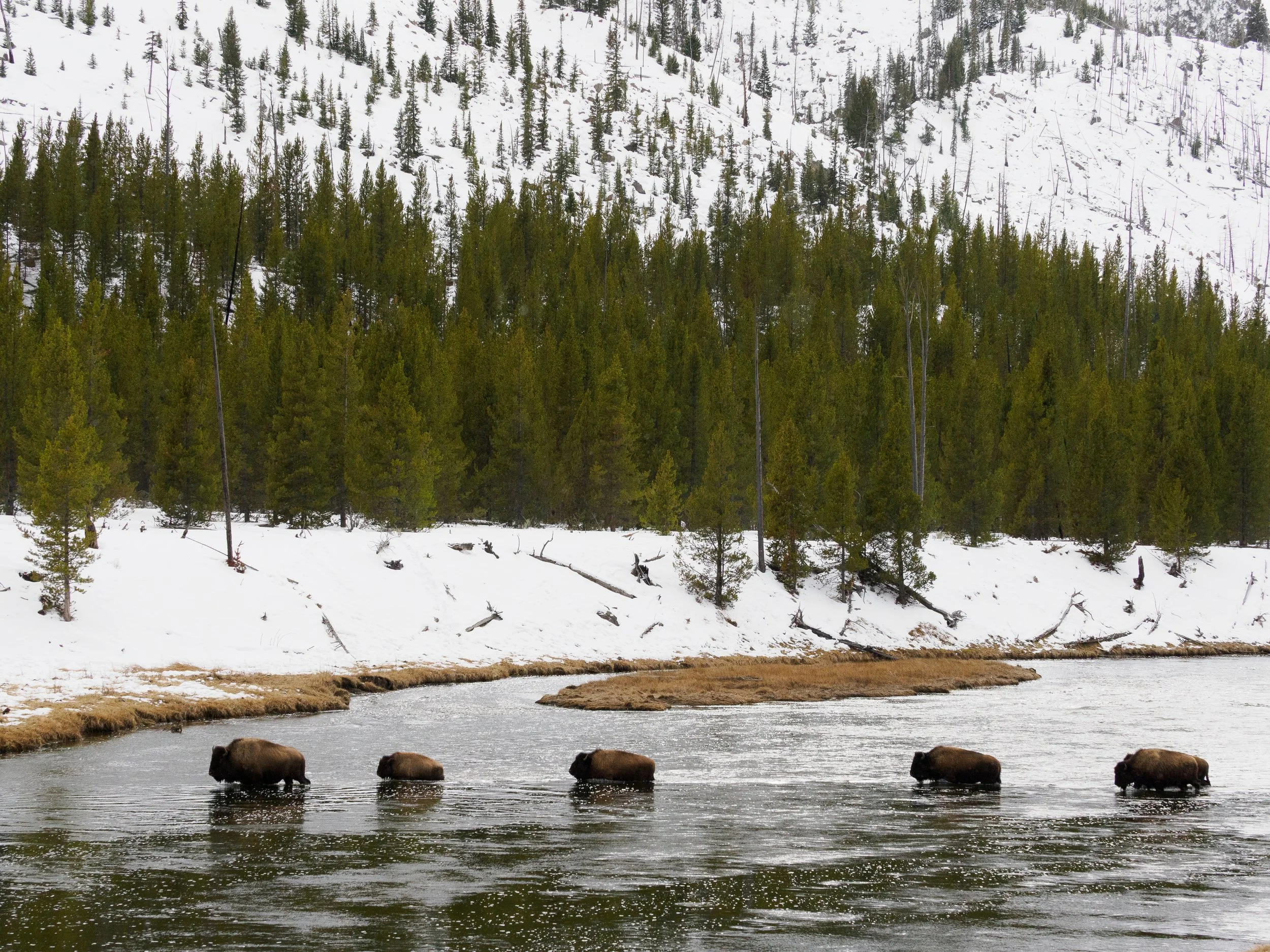
A small group of bison crosses the Madison River, a winter strategy to avoid predators
We find her quickly. In a long, straight stretch of river that opens into a broad delta, a lone female bison stands near the shore. She is injured. A dark patch of blood stains her shoulder, stark against her thick winter coat. Across the river, more blood marks show where she fought off members of the pack just minutes earlier.
As we approach quietly, the sound of the river masking our presence, movement catches our eye in the trees along the opposite bank. A lone wolf stands at the edge of the forest, just over a hundred yards away, watching her closely. Not hunting. Just watching.
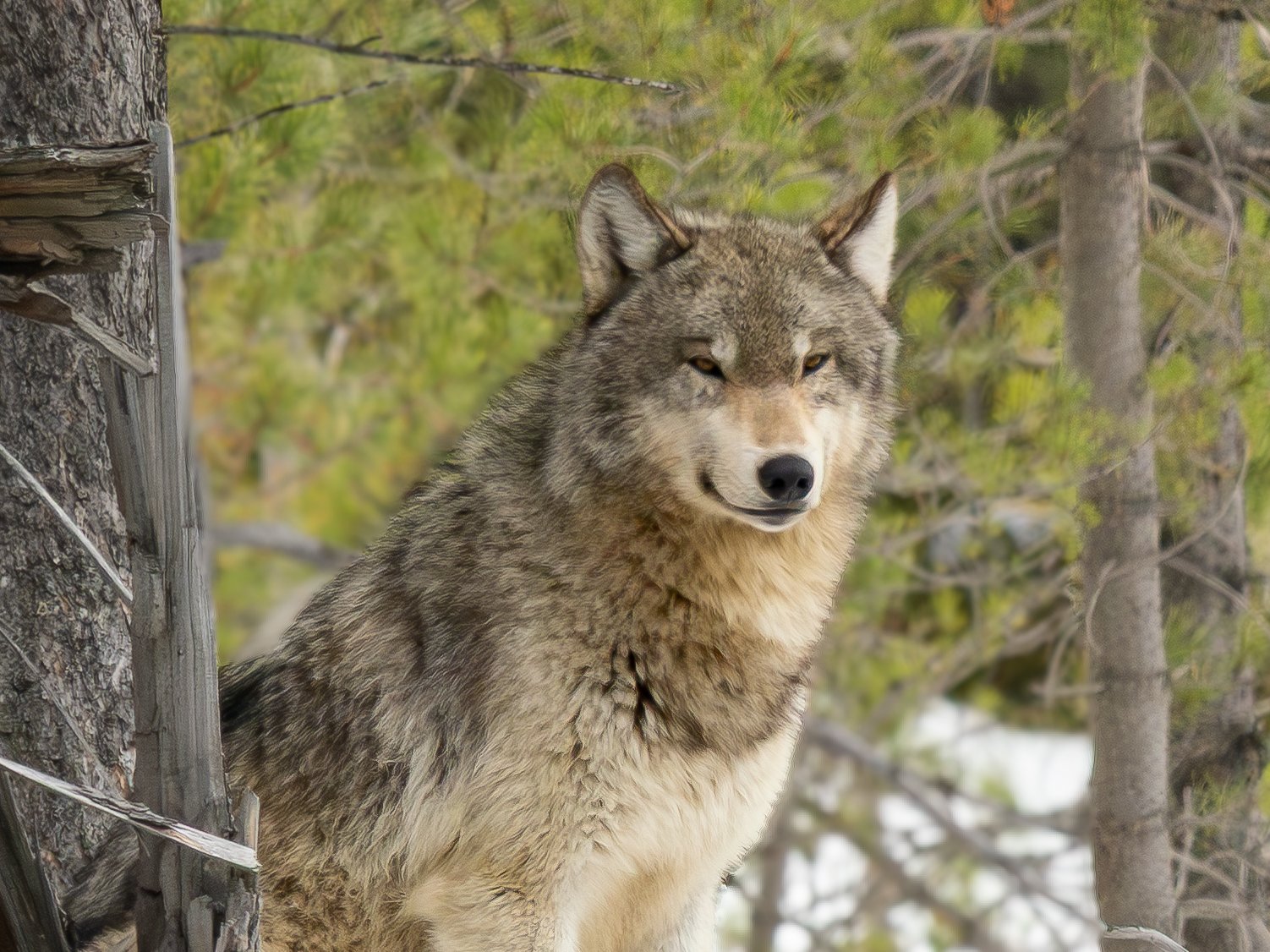
A wolf watches from the tree line, scanning the river corridor as the pack begins to organize.
This is the territory of one of Yellowstone’s largest packs, the Wapiti Lake Pack, nearly twenty animals this year. Named for Wapiti Lake at the heart of their range, their movements extend from Lamar Valley in the north through Hayden Valley and west toward the Madison.
We position ourselves above the scene. Over the next few hours, several pack members appear, moving along the river’s edge. They slip through the trees, emerge briefly, then disappear again. Sometimes playful pairs. Other times solitary figures pausing to drink. But all of them are watching, waiting.
The bison stands in the river, the Madison’s current pressing against her legs. She feeds when she can, but every movement is measured. She keeps her back to the near shore, her gaze returning again and again to the forest.
The tension is unmistakable.
But nothing happens. Not yet.
As afternoon fades toward evening, more wolves appear. Occasional howls rise from within the trees, answered from farther away. The pack is gathering, drawn by sound and scent. They greet one another in brief bursts of energy, circling, playing, tails raised, before settling again into stillness.
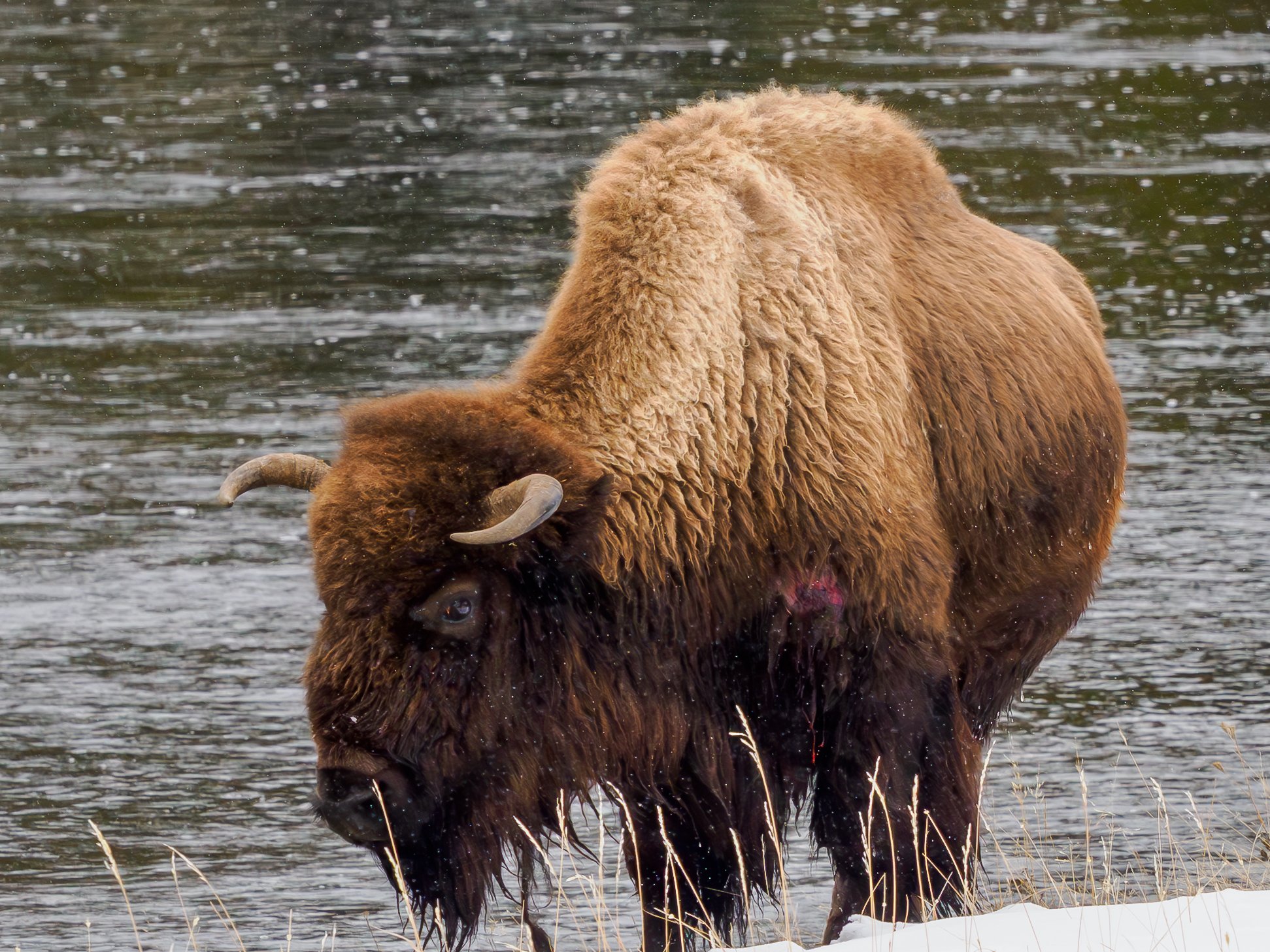
A bison cow stands in the river, injured, as wolves begin to gather
The bison shifts deeper into the current. Each step now slower. The injury is taking hold.
Still, she holds her ground.
The light fades.
Night comes.
Day 2 – The Fall
Before dawn, we return to the same stretch of the Madison River where we left the bison the night before, pressed against the north bank, her gaze fixed across the water.
A full-grown bison is formidable prey. Fifteen hundred pounds of muscle and bone. Even injured, she can kill with a single movement, hooking with her horns or crushing with a kick.
We arrive in the dark, guided only by faint reflections off the snow. The river’s warmth lifts mist into the cold air, forming a low fog that obscures the far bank.
There is movement across the water, but nothing is clear.
Then I see it. The bison is gone.
Suddenly, as if sensing our presence, the steady rush of the river is broken. High-pitched barks cut through the stillness from the tree line across the river, followed by the eruption of the Wapiti pack into a chaotic rally.
The sound builds quickly, swelling until it overtakes the river itself. Sharp barks rise into deep, full-throated howls, answered by others in the distance. The rally ends as quickly as it began.
As first light spreads across the valley, the scene becomes clear.
On the far shore, the bison lies motionless. I find myself caught between the weight of the bison’s loss and the improbable success of the wolves.
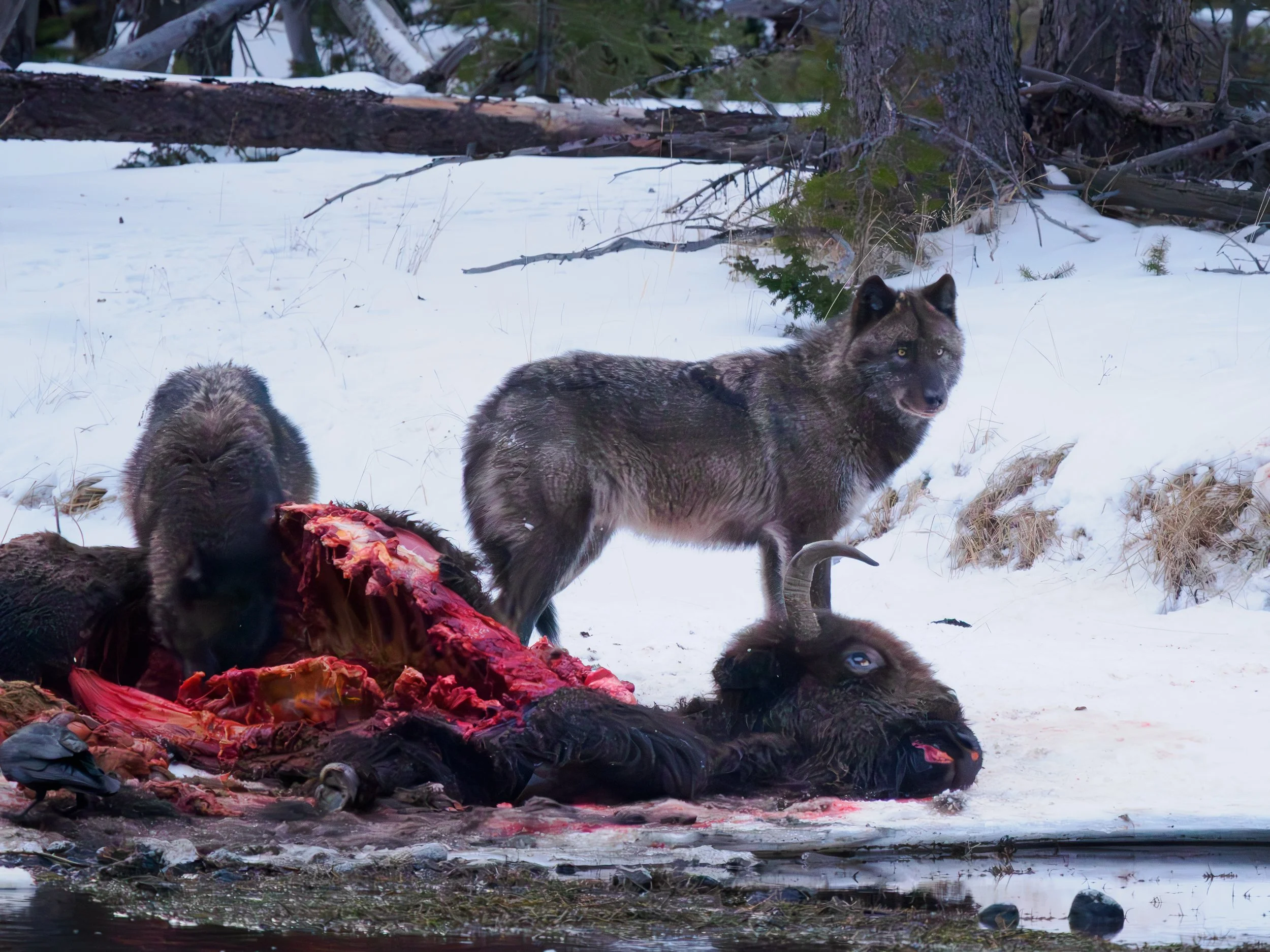
The pack gathers along the riverbank, a moment of success that will soon draw in others
The tracks in the snow tell the story.
The wolf tracks come out of the river about a hundred yards downstream, then fan out along the bank. The plan is taking shape. The bison’s position, pressed to the north shore, had held through the day. In the night, it became a trap.
One of many tracks show the strategy of the wolf pack
The wolves came from behind in the dark. Others moved along the edges on both sides, closing the distance, testing, waiting. At some point, she must have turned. At some point, she lost her footing on the rocks. There is no blood on the snow. The struggle likely happened in the shallows.
By morning, she is on the south shore, pulled into cover, away from the open river delta.
For the wolves, taking down a full-grown bison is a serious risk. It requires patience, coordination, and timing. Most wolf packs focus on elk.
The Wapiti Lake Pack is different.
I have heard this before, but I had never seen it for myself.
They return to bison again and again, a learned risk, a skill passed down. It requires patience, coordination, and timing. Most attempts fail. The risk is real.
But when it works, it changes everything.
Success can feed the pack for days.
Today, it did.
As the day unfolds, the wolves settle. Some return intermittently to the bison, while others bed down in the tree line, holding close to their prize but out of sight.
The valley grows quiet again.
At dusk, we leave the scene. I carry the weight of what we have witnessed and wonder what tomorrow will bring.
Day 3 – Leave No Trace
“Leave no trace” is a phrase I have often heard as I search for stories and photographs in these special places.
Today, we arrive at the Madison later in the morning. The sun breaks through the clouds, casting a rich, glowing light across the river corridor. The scene feels different now.
The wolf pack is gone.
In their place, a gathering of ravens has taken over the site.
Ravens and wolves share a loose alliance. Both are highly intelligent animals. Ravens can live up to 30 years. The wolves tolerate them. The ravens benefit. They follow, watch, and wait, sometimes even helping locate prey or alert wolves to opportunity.
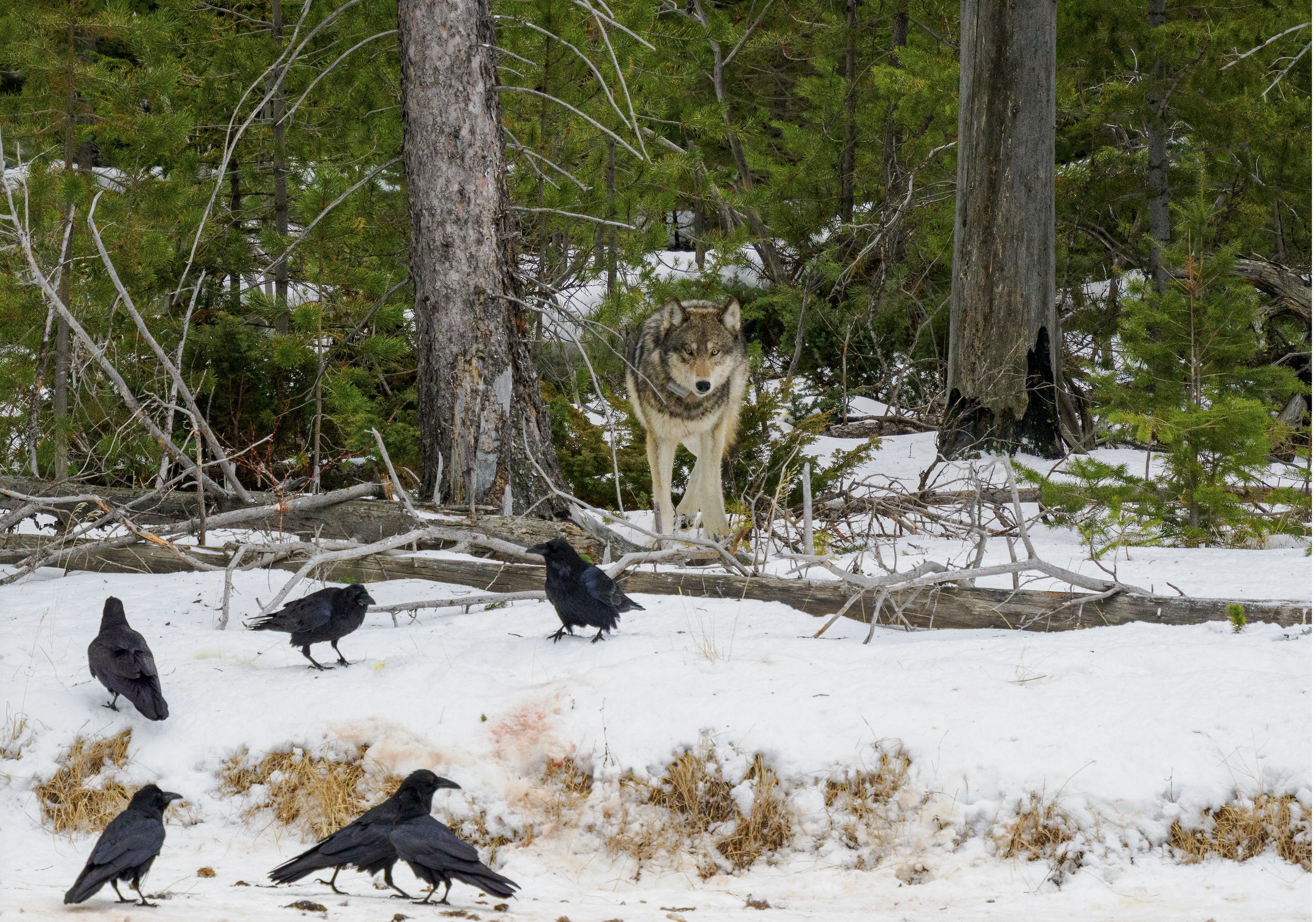
A wolf tolerates ravens, part of a long-standing and complex relationship between species.
The site is noisy, chaotic. Ravens call constantly, hopping and circling, pulling at what remains. Their presence draws in others, scavengers and opportunists, each arriving to take their share. The process accelerates. What was once a massive animal is now disappearing.
Leave no trace.
A few younger wolves return intermittently. Lower in the pack’s hierarchy, they may not have had their fill. There is still food, but even now, there is an order. They move in cautiously, take what they can, and retreat again to the safety of the trees. As they rest along the tree line, the site opens and others join.
This morning, a young eagle perches above the scene, watchful and hesitant. He sits, and it seems he will only watch. Then, with little warning, a large adult male sweeps in along the river, dropping suddenly to strike the younger bird from its perch. For a moment, both tumble toward the river, nearly falling into the chaos below. They recover, regroup, and then claim their place among the ravens.
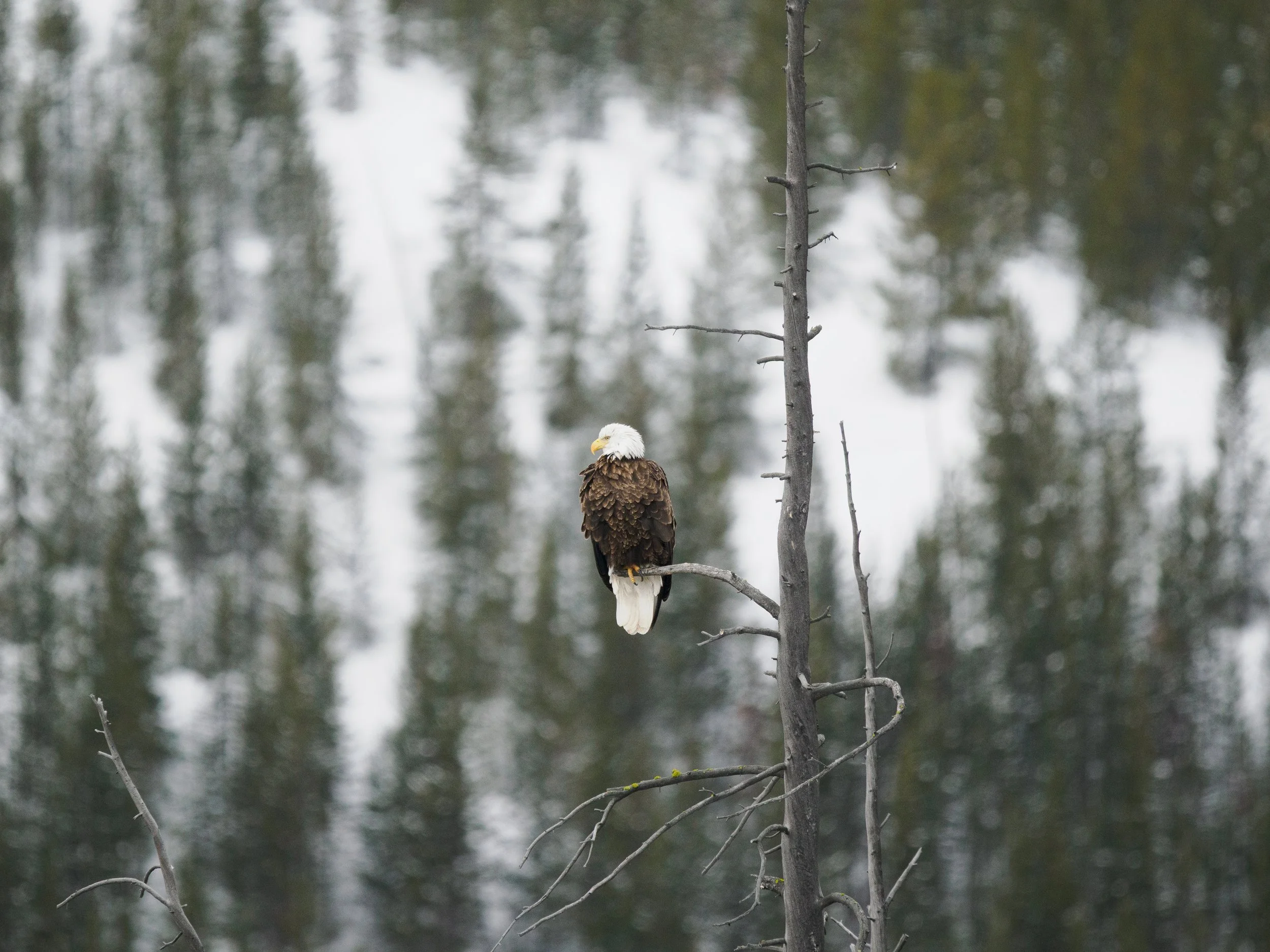
A bald eagle waits above the river, watching for an opening among the competing scavengers.
As the morning unfolds, more eagles arrive, adults and juveniles alike, perching above before dropping into the fray. One after another, they come and go, turning the scene into something almost surreal. An eagle gathering.
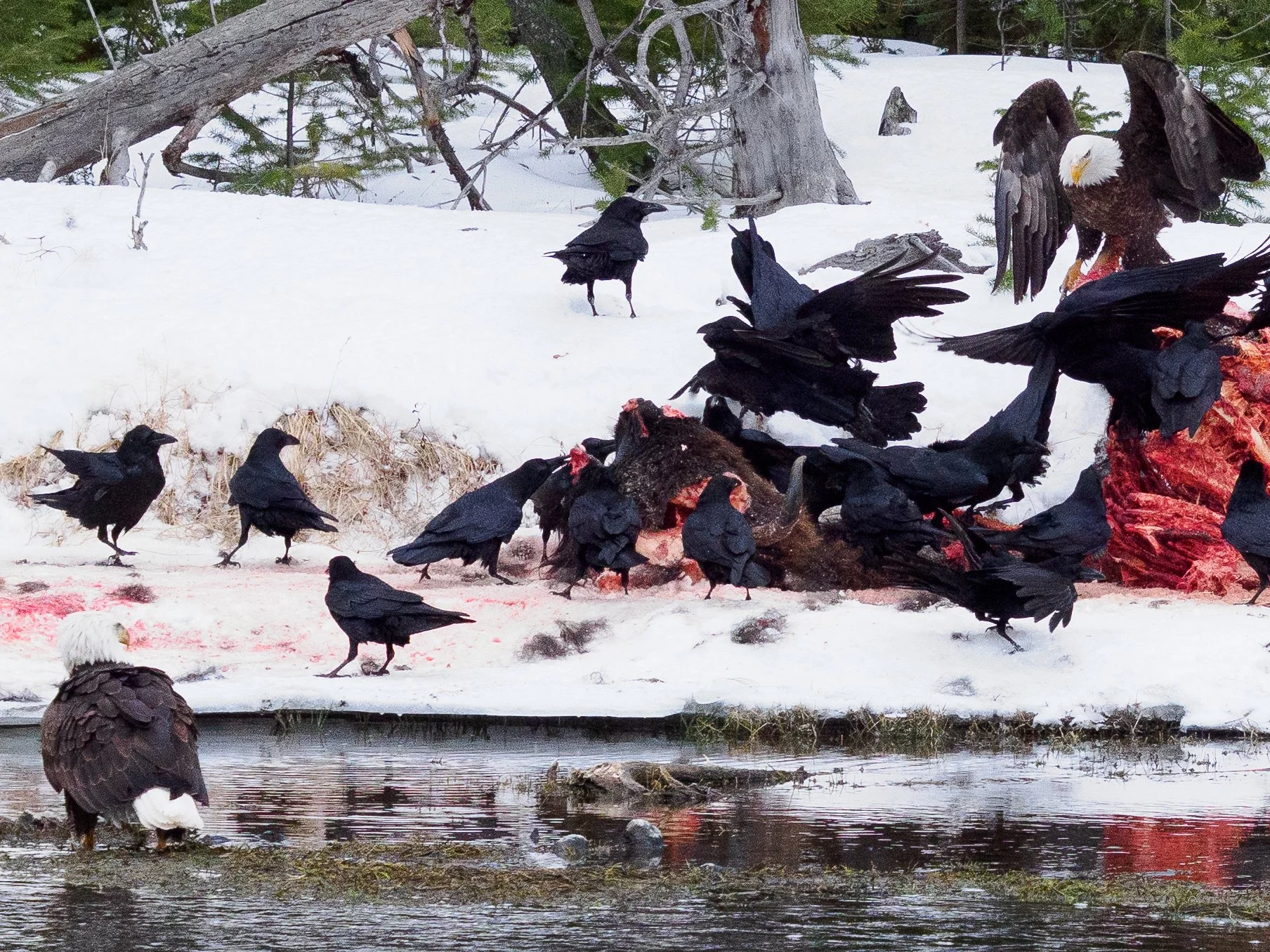
Ravens and bald eagles gather quickly, turning a single event into a shared resource.
From the west, a coyote emerges on the opposite bank. She moves carefully, low and deliberate, eyes fixed on the tree line. Nervous, but driven by hunger, she edges closer, then commits. Blood covers her face as she retreats to safety moments later.
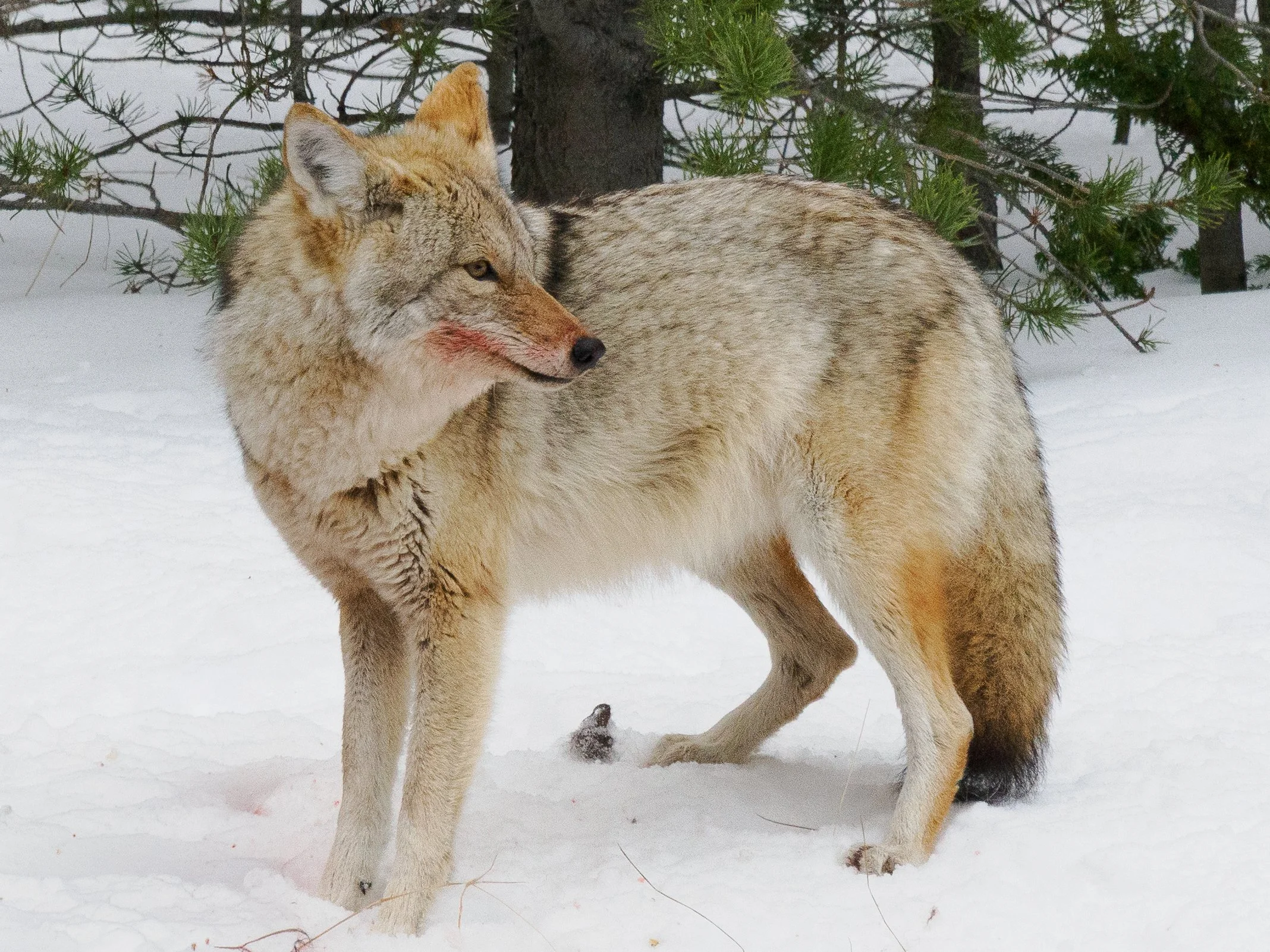
A coyote slips in cautiously, taking advantage of the opportunity before retreating to safety.
Soon after, a second coyote approaches from the east, and the same sequence unfolds.
As midday arrives, the scene becomes a shifting mosaic of movement: ravens, eagles, and coyotes, each testing, each taking their chance. At times, the rhythm breaks as a young wolf returns, charging through the site, scattering birds and coyotes alike. It feeds briefly, then disappears again into the forest.
And then the cycle resumes.
For hours, the activity continues, visitors arriving and departing, the energy constant.
Yesterday, this scene fed the Wapiti Pack.
Today, the bounty feeds the forest.
Day 4 – The Return
The next morning, fresh snow has fallen overnight. It has been a lean year for snowfall. A white dusting covers the bare ground, softening the landscape and giving the day a fresh feel and a sense of renewal.
We are out early, my last day in Yellowstone this winter. Our small group returns to the river, expecting some continuation of the days before. Instead, the riverbank is mostly quiet.
What was, just two days ago, a chaotic, violent scene now holds almost no trace.
The urgency has passed. A few ravens linger, but the eagles are gone. The coyotes have moved on. Where yesterday there was frenzy and chaos, today there is little left to mark it. The snow is scattered, but the fresh dusting has all but erased the evidence of the events of recent days along both banks.
Along the opposite shoreline, the last of the great bison cow remains.
A young black wolf emerges from the tree line in the early sunlight, less anxious now than in the days before, almost playful. He watches us, his eyes bright in the morning light.
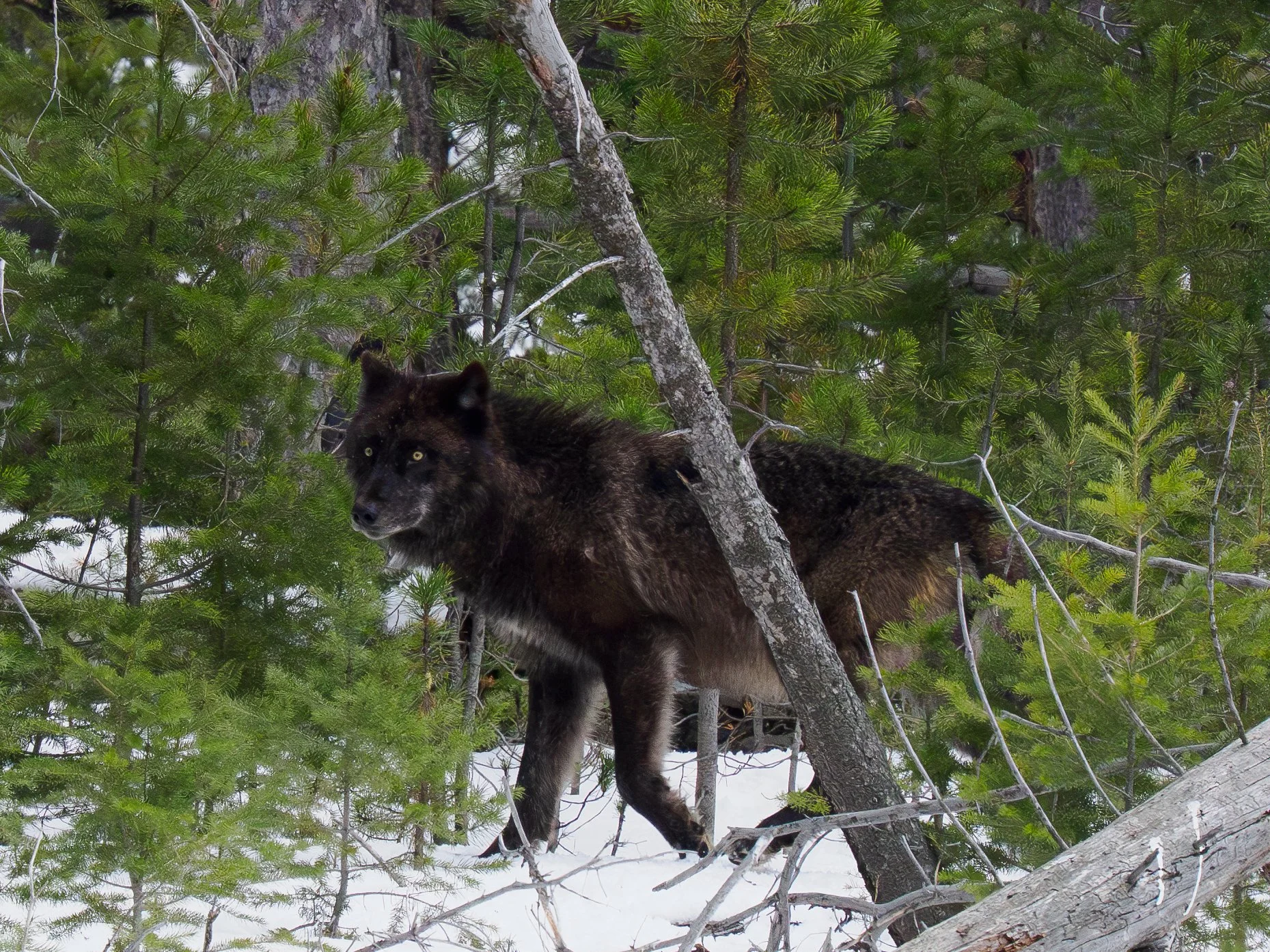
He moves to the pelt lying on the ground, takes hold, and shakes at the frozen hide, working to free it. He drags the remains back from the river’s edge. As he turns it, the curve of the horns, once used to defend, catches the light, the last sign of what once was.
Then, with a bite to the neck, the young wolf lifts the weight in its powerful jaws and turns toward the forest. For a moment, he pauses, then disappears among the pines.
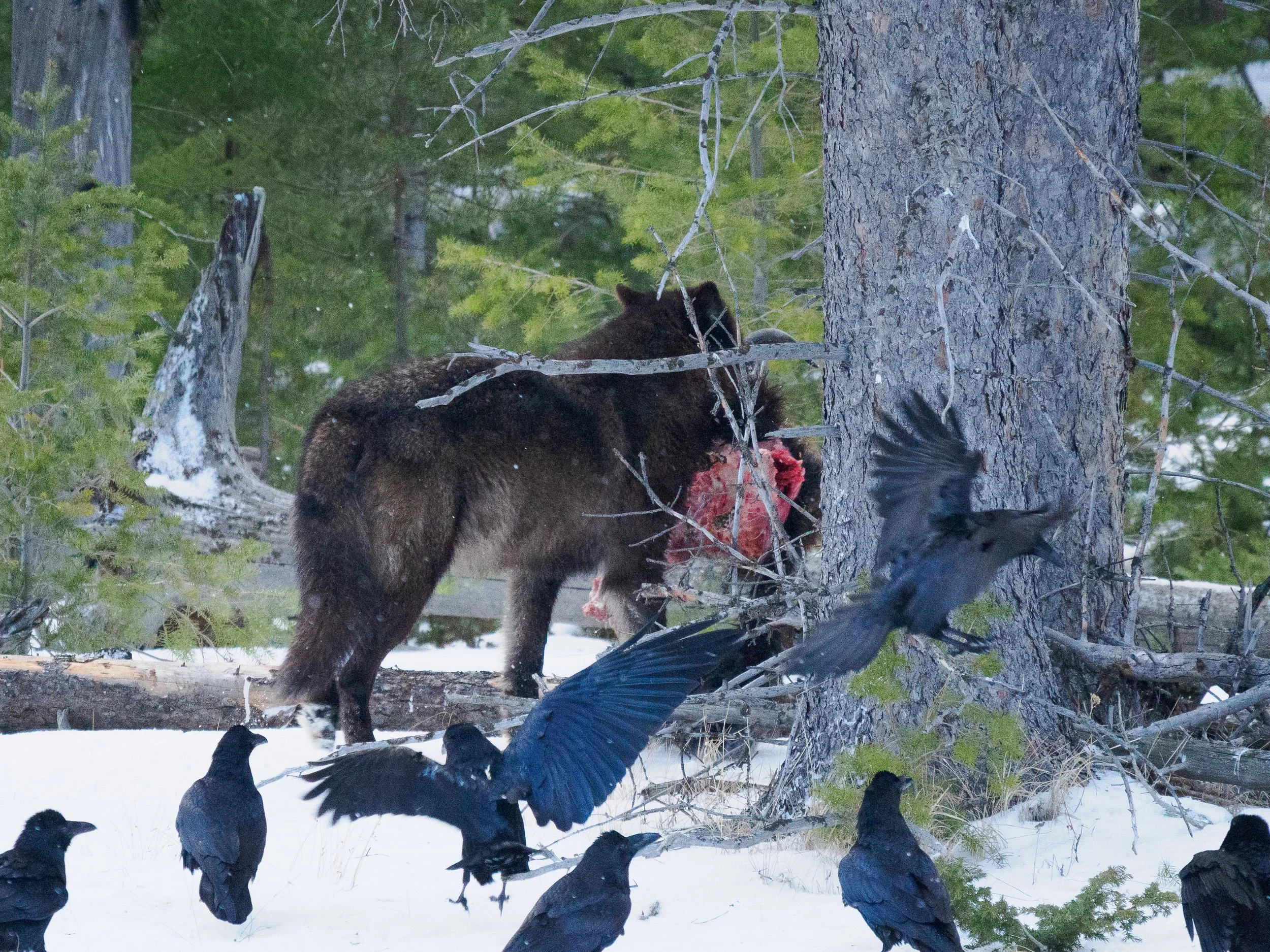
A young black wolf carries off the last of the bison
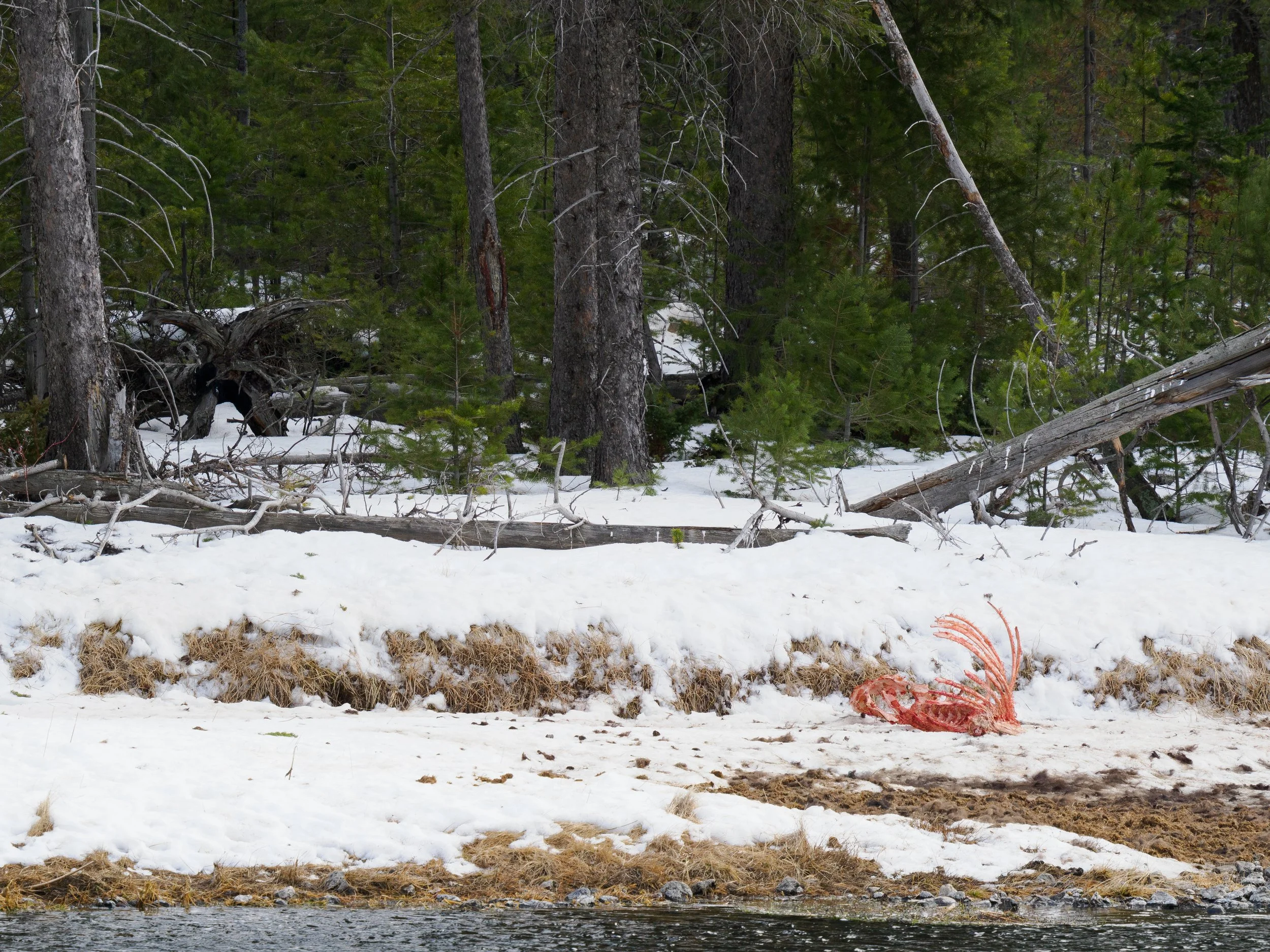
The river fills the silence.
The shoreline is empty now. The pack has moved on.
Four days along the Madison. A scene repeated countless times. Survival, fall, return. Leaving no trace.